

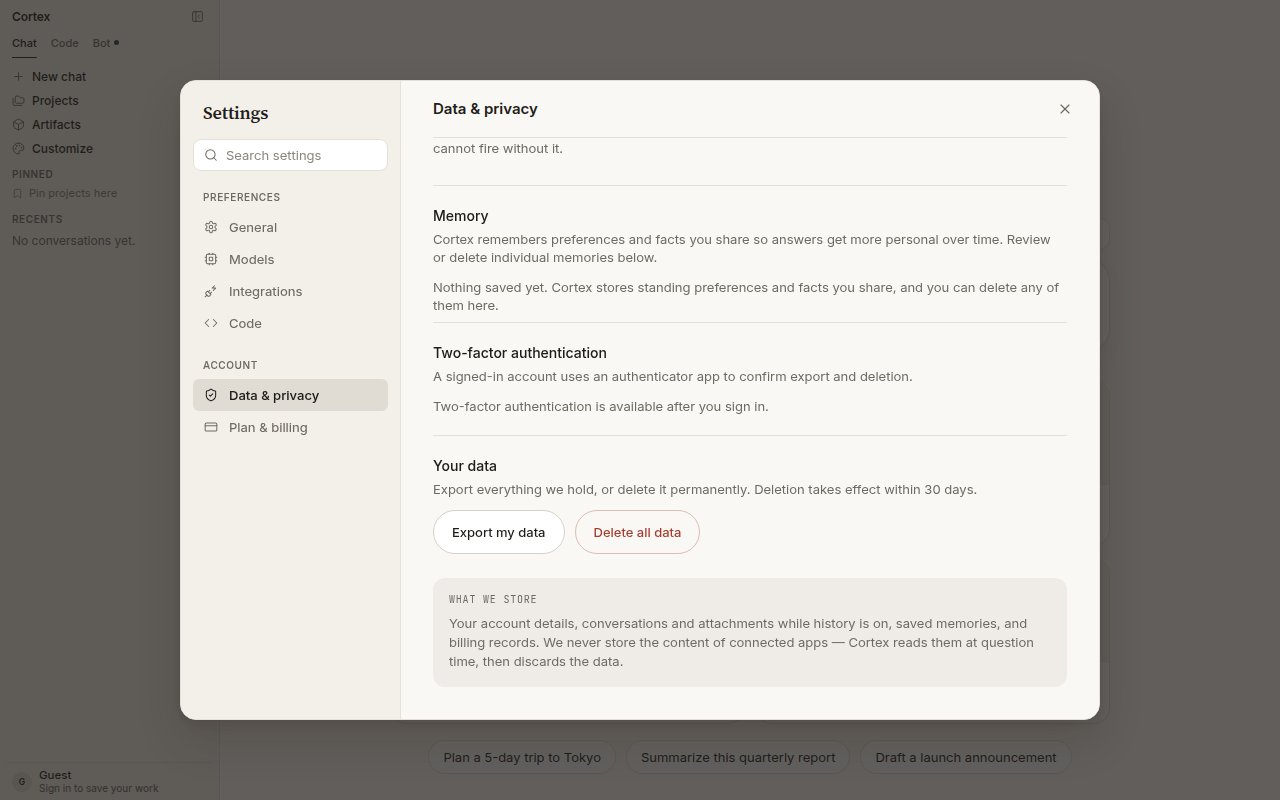
Settings → Data & privacy → Memory. Every saved memory is listed and can be deleted on its own.
What memory is
How memories are created
Chat saves a memory when you tell it something worth keeping — always answer in French, my team ships on Thursdays — or when it recognises a standing preference from how you work. Memories are read at the start of a turn alongside project instructions.Review and forget
1
Open Settings → Data & privacy
Scroll to Memory. Every saved memory is listed.
2
Read what Cortex stored
Each entry is a short sentence in plain language.
3
Delete what you do not want kept
Deletion is immediate and per memory. There is no buried toggle.
Plans
Go and Plus list extended memory and context among their features. See Plans.Related
- Projects — instructions scoped to one body of work.
- Security — what Cortex stores and how to export or delete everything.
- How Chat works — where memory enters the prompt.